8 Steps to Identify and Fix Houseplant Deficiencies
Indoor plants signal stress through their leaves long before they collapse. Chlorotic margins, interveinal yellowing, and necrotic spotting are the botanical equivalent of a distress flare. Understanding steps for identifying nutrient deficiencies in houseplants begins with reading these symptoms as a diagnostic code. A phosphorus shortage manifests differently than manganese toxicity, and the distinction determines whether your fiddle-leaf fig recovers or declines. Each element plays a non-negotiable role in enzymatic function, photosynthetic efficiency, and cellular integrity.
Materials
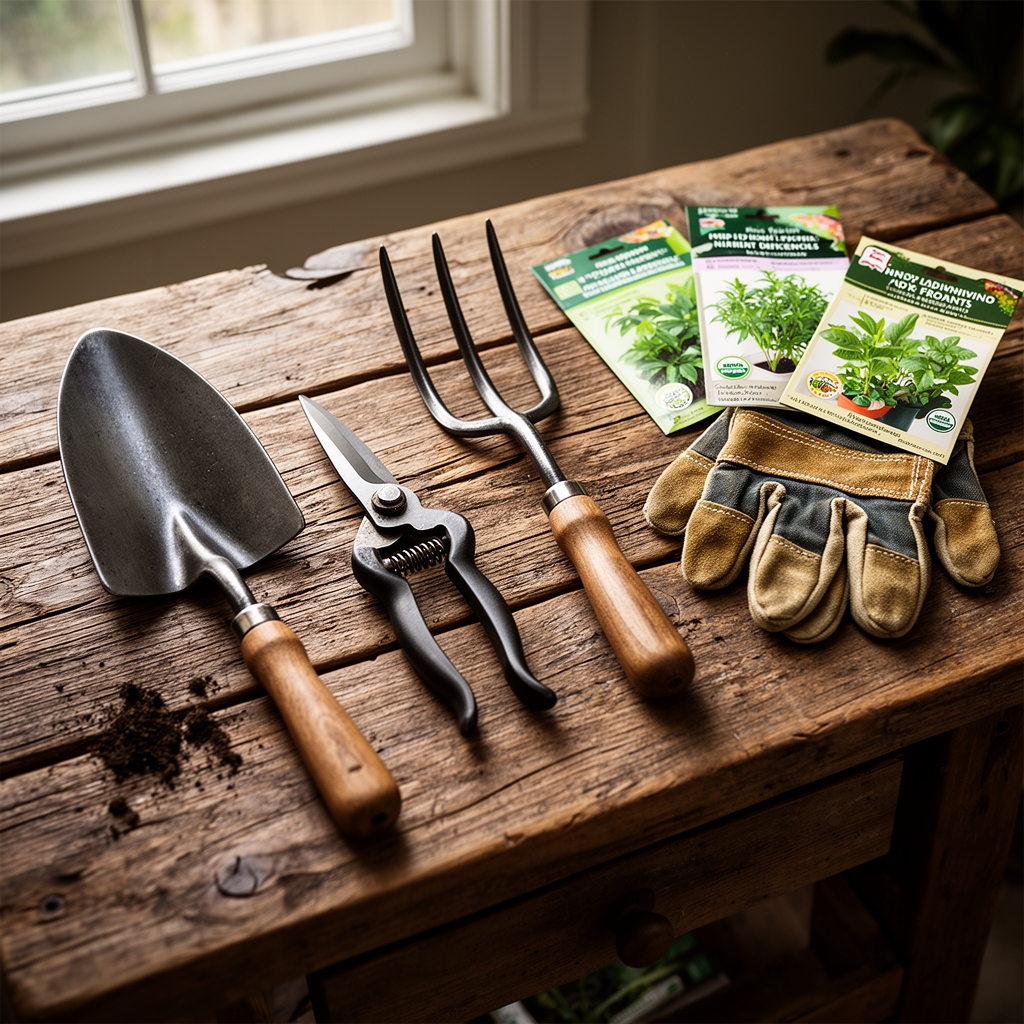
Precision in amendment selection prevents secondary deficiencies. Use a balanced 4-4-4 organic meal for general maintenance in containers with pH 6.0 to 6.8. Acid-loving species such as gardenias and azaleas require sulfur-amended mixes holding pH 4.5 to 5.5. For immediate correction, chelated micronutrient sprays deliver iron, manganese, and zinc through foliar uptake within 48 hours. Keep a soil test kit with NPK color-coded strips and a pH meter accurate to 0.1 units. Stock Epsom salt (magnesium sulfate) at 1 tablespoon per gallon for magnesium deficiency, and dolomitic lime for calcium-magnesium balance in peat-heavy substrates. Mycorrhizal fungi inoculant improves phosphorus availability by colonizing root cortex cells and extending hyphal networks into low-cation exchange capacity media.
Timing
Indoor environments decouple nutrient uptake from traditional hardiness zones, but seasonal light intensity still governs metabolic demand. In USDA Zones 3 through 7, houseplants experience reduced transpiration from November through February. This dormancy window requires cutting fertilizer application to one-quarter strength or suspending it entirely. Resume feeding at two-week intervals after the spring equinox when day length exceeds 12 hours. Tropical species grown under grow lights with 14-hour photoperiods maintain active growth year-round and tolerate consistent feeding schedules. Flush containers every 8 weeks to prevent salt accumulation that mimics deficiency symptoms by disrupting osmotic balance.
Phases

Sowing and Propagation
Start cuttings in sterile vermiculite or perlite with no added nutrients. Auxin distribution in juvenile tissue prioritizes root initiation over foliage expansion. Once roots reach 1 inch in length, transplant into a starter mix containing 1-2-1 NPK ratio. Excessive nitrogen during rooting diverts carbohydrates to leaf production and weakens structural development.
Pro-Tip: Dip cutting ends in rooting hormone powder containing 0.3% indole-3-butyric acid to accelerate adventitious root formation by 40%.
Transplanting and Establishment
Match pot size to root volume with 1 inch of clearance on all sides. Oversized containers retain excess moisture, limiting oxygen diffusion and causing iron chlorosis through anaerobic conditions. Incorporate slow-release fertilizer prills at 1 teaspoon per 6-inch pot during transplant. Amend coir-based media with calcium nitrate at 1 gram per liter to offset potassium competition in the substrate.
Pro-Tip: Score root balls in a crosshatch pattern at 1/4-inch depth to stimulate lateral root growth and improve nutrient interception surface area.
Maturation and Fruiting
Shift NPK ratio to 2-3-4 for flowering species once apical meristems initiate bud primordia. Phosphorus concentration governs ATP synthesis in reproductive tissues. Potassium regulates stomatal conductance and strengthens cell walls against fungal penetration. Reduce nitrogen to prevent vegetative reversion and excessive leaf production at the expense of blooms.
Pro-Tip: Apply boron foliar spray at 0.5 ppm during flower bud swell to improve pollen viability and prevent bud abortion in hibiscus and citrus.
Troubleshooting
Symptom: Interveinal chlorosis on new growth
Solution: Iron deficiency induced by alkaline pH. Drench soil with chelated iron (Fe-EDDHA) at 1 gram per gallon. Lower substrate pH to 6.2 using elemental sulfur at 1 teaspoon per gallon.
Symptom: Purple-red pigmentation on leaf undersides
Solution: Phosphorus lockout from cold root zone temperatures below 55°F. Raise ambient temperature to 68°F and apply monoammonium phosphate at half-strength weekly for three applications.
Symptom: Marginal necrosis on mature leaves
Solution: Potassium deficiency. Apply potassium sulfate at 1/2 teaspoon per gallon every two weeks. Confirm soil EC below 2.0 mS/cm to rule out salt burn mimicry.
Symptom: Entire leaf yellowing and premature abscission
Solution: Nitrogen deficiency during active growth. Apply urea or fish emulsion at 1 tablespoon per gallon immediately, then resume 10-10-10 liquid fertilizer at label rate.
Symptom: Stunted growth with dark green leaves
Solution: Phosphorus deficiency combined with excess nitrogen. Flush substrate with 2 gallons of water per 1 gallon of soil, then apply bone meal at 2 tablespoons per 8-inch pot.
Maintenance
Water when the top 1 inch of substrate feels dry to touch. Deliver water until 10% drains from the bottom, ensuring full saturation of the root zone. Fertilize every 14 days during active growth with 150 to 200 ppm nitrogen from a complete soluble formula. Leach pots monthly with pure water at three times container volume to remove residual salts that elevate EC above 3.0 mS/cm. Rotate plants 90 degrees weekly to equalize auxin distribution and prevent phototropic lean. Monitor substrate pH quarterly using a slurry test: combine 1 part soil with 2 parts distilled water and read with a calibrated meter.
FAQ
How quickly do deficiency symptoms reverse?
Mobile nutrients like nitrogen show improvement in 5 to 7 days. Immobile elements such as calcium require new growth to display correction, typically 3 to 4 weeks.
Can I use garden soil indoors?
No. Native soil compacts in containers, eliminating macropore space and causing anaerobic conditions that induce root rot and nutrient lockout.
What causes tip burn despite regular feeding?
Fluoride or chlorine toxicity from tap water, or overfertilization raising soluble salts above 2.5 mS/cm. Use distilled water or reduce fertilizer concentration by 50%.
Do LED grow lights affect nutrient needs?
Yes. Higher photosynthetic rates under full-spectrum LEDs increase demand for all macronutrients by approximately 30% compared to low-light conditions.
Should I fertilize a sick plant?
Not if roots are damaged. Address root health first through improved drainage and aeration, then resume dilute feeding at one-quarter strength after new root tips emerge.