6 Watering Hacks to Prepare an Indoor Garden for Vacation
Indoor plants left unattended during travel often return to wilted foliage, dropped leaves, and soil so dry it repels water. The good news is that understanding how to prepare an indoor garden for a vacation transforms that stress into confidence. Strategic hydration techniques, soil amendments that boost water retention, and simple automation keep roots moist without creating anaerobic conditions that invite root rot.
Materials
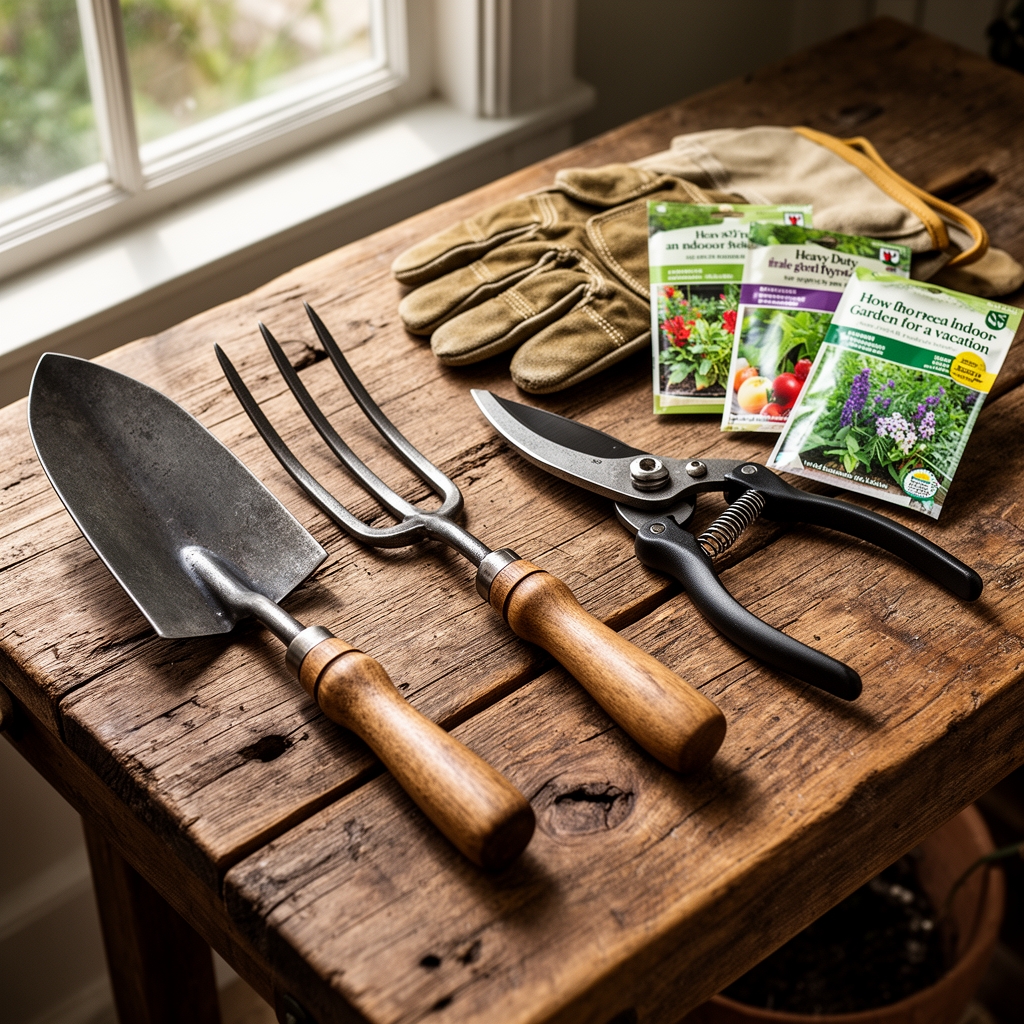
Effective vacation preparation begins with the right tools and amendments. Capillary matting (felt or synthetic fiber) wicks water from a reservoir to pot bases through passive osmosis. Self-watering globes (borosilicate glass or PET plastic) release moisture gradually as soil dries, typically sustaining 4-7 days of hydration depending on pot volume and transpiration rate.
For extended trips, amend potting mix with sphagnum peat moss or coir at a 30% ratio to increase cation exchange capacity and water-holding capacity by 15-20%. Add perlite at 10% to maintain aeration and prevent compaction. Hydrogel crystals (cross-linked polyacrylamide) absorb up to 400 times their weight in water, though organic growers prefer zeolite minerals that release moisture while adsorbing excess ammonium.
A balanced slow-release fertilizer at 3-1-2 NPK ratio prevents nutrient depletion during automated watering. Organic options include composted manure pellets (4-4-4) or kelp meal (1-0.1-2) to support mycorrhizal fungi colonization, which extends effective root surface area by 100-1000 times.
Timing
Indoor gardens face no true hardiness zone constraints, but seasonal light intensity affects transpiration rates and vacation watering strategies. Summer vacations coincide with peak photosynthetic activity when stomatal openings increase water loss by 40-60% compared to winter dormancy.
Plan preparations 7-10 days before departure. This window allows observation of automated systems under normal conditions. Test wicking mats and reservoir refill rates during the week preceding travel. Note that tropical species (Monstera, Philodendron) demand 0.25-0.5 inches of water per week during active growth, while succulents (Sansevieria, Echeveria) tolerate 14-21 days of complete drought.
Adjust watering schedules if departure falls within a plant's active growth flush. New leaf emergence increases auxin distribution to growing tips, doubling water demand temporarily. Delay fertilization for 3 weeks before travel to prevent salt accumulation in substrate when watering frequency drops.
Phases
Assessment Phase (Days 10-7 Before Departure)
Inspect all containers for drainage functionality. Blocked drainage holes create perched water tables that suffocate roots within 72 hours. Remove saucers or elevate pots on trivets to prevent base saturation.
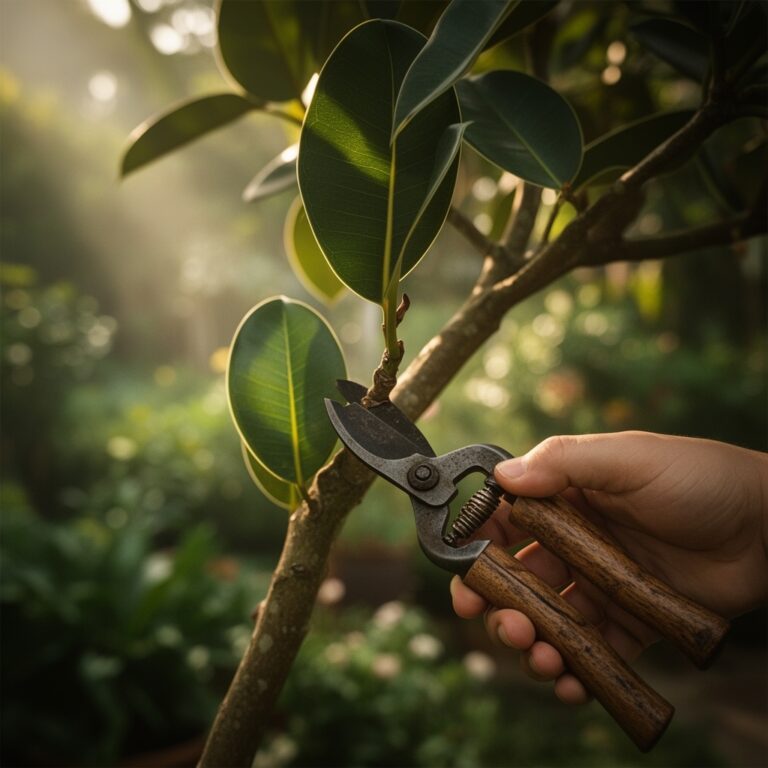
Measure soil moisture at 2-inch depth using a tensiometer or moisture meter calibrated to 4-7 centibar reading for optimal root zone conditions. Prune dead foliage and spent flowers to reduce transpiration surface area by 10-15%.
Pro-Tip: Apply mycorrhizal inoculum (Glomus intraradices) to root zones 10 days before travel. Hyphal networks extend moisture uptake radius by 6-8 inches beyond root tips.
Installation Phase (Days 7-3 Before Departure)
Set up wicking systems by placing capillary matting in waterproof trays. Fill trays with 1-2 inches of dechlorinated water. Position pots directly on saturated matting. Capillary action sustains moisture for 10-14 days in 6-8 inch pots.
For individual containers, insert terracotta watering spikes connected to inverted wine bottles or 2-liter reservoirs. Spikes release 50-100ml daily through porous ceramic as soil dries. Alternatively, group plants by water needs and create micro-climates using humidity domes or clear plastic tenting to reduce transpiration by 30-40%.
Pro-Tip: Cut wine bottle watering stakes at a 45-degree angle during insertion to maximize pore contact with root zone, increasing flow rate precision.
Monitoring Phase (Days 3-0 Before Departure)
Relocate plants away from south and west windows where afternoon temperatures exceed 85°F and accelerate water consumption. Reduce light intensity by 25-30% using sheer curtains to lower photosynthetic demand and stomatal conductance.
Water thoroughly 24 hours before departure until drainage appears. This saturates substrate micropores and activates hydrogel crystals or zeolite minerals. Check all reservoir levels and top off to maximum capacity.
Pro-Tip: Add 1 tablespoon of 3% hydrogen peroxide per gallon of reservoir water to prevent algae growth and maintain dissolved oxygen at 6-8 ppm during stagnant periods.
Troubleshooting
Symptom: Leaf margins turn brown and crispy upon return
Solution: Insufficient water reached root zone. Hydrophobic peat-based media repels water when completely dry. Next trip, use wetting agents (yucca extract at 1ml/gallon) in pre-trip watering to reduce surface tension and improve infiltration by 40%.
Symptom: Yellow lower leaves with mushy stems at soil line
Solution: Overwatering and anaerobic conditions triggered Pythium root rot. Reduce reservoir depth to 1 inch maximum. Ensure drainage holes remain unobstructed. Add 15% pine bark fines to substrate to improve oxygen diffusion rate.
Symptom: White crusty deposits on soil surface and pot rims
Solution: Salt accumulation from mineral-rich tap water in automated systems. Flush pots with distilled water at 2x container volume before vacation. Use reverse osmosis water (TDS below 50 ppm) in all reservoirs.
Symptom: Wilted plants despite full reservoir
Solution: Capillary break between matting and pot base or clogged ceramic spikes. Verify direct contact between wet matting and container bottoms. Soak terracotta spikes in white vinegar for 30 minutes to dissolve calcium carbonate blockages.
Symptom: Fungus gnats emerge in humid tented environments
Solution: Excessive surface moisture and organic matter decomposition. Apply 0.5-inch layer of horticultural sand or diatomaceous earth to soil surface before tenting. This desiccates larvae and interrupts breeding cycle.
Maintenance
Return home and immediately check soil moisture at root zone depth. If dry below 2 inches, water in 0.5-inch increments over 6-hour intervals rather than flooding. Rapid rehydration shocks roots and damages fine root hairs responsible for 90% of water uptake.
Remove automation systems within 48 hours to restore normal air circulation. Prolonged humidity above 70% encourages powdery mildew on susceptible species like Begonia and African violets.
Resume regular watering schedules gradually. Monitor for 7 days post-return, as plants acclimated to lower light and reduced transpiration need 10-14 days to readjust metabolic rates.
Fertilize at half-strength 2 weeks after return using balanced liquid formulation (20-20-20 at 100 ppm nitrogen). Avoid feeding stressed plants immediately, as compromised roots cannot process nutrients efficiently and salt damage occurs.
Inspect for pest pressure, particularly spider mites and mealybugs that proliferate in stressed, dry conditions. Wipe leaves with neem oil solution (1 tablespoon per quart water) if populations detected.
FAQ
How long can indoor plants survive without watering during vacation?
Survival duration depends on species physiology and pot size. Succulents tolerate 3-4 weeks. Tropical foliage plants (Pothos, Snake Plant) manage 10-14 days in 8-inch pots with pre-trip saturation. Ferns and Calathea require intervention after 5-7 days due to high transpiration rates.
Do self-watering globes work for all plant types?
Globes function best for plants requiring consistent moisture like Fittonia and Peace Lily. They deliver 50-75ml daily through gravity and soil suction. Cacti and succulents risk overwatering as globes cannot adjust to low-demand metabolism. Match globe volume to pot size: use 1-liter globes for 10-inch containers.
Should I move plants to a bathroom for higher humidity?
Bathrooms work if natural light reaches 200-400 foot-candles minimum through windows. Most bathrooms provide insufficient photosynthetically active radiation for more than 7 days. Group plants together in main living areas instead. Transpiration from multiple specimens creates localized humidity zones of 50-60% without sacrificing light.
Can I use ice cubes to water plants slowly while away?
Ice cube watering is inefficient and potentially harmful. Sudden temperature drops near roots (from 70°F to 32°F) damage cellular membranes and slow nutrient uptake. Melting rate is unpredictable, varying by room temperature. Use temperature-stable wicking systems instead for consistent hydration at 65-75°F.
What is the maximum vacation length for automated watering systems?
Properly configured capillary mat systems with 5-gallon reservoirs sustain 15-20 average-sized pots for 14-16 days. Install programmable drip irrigation with digital timers for trips exceeding 3 weeks. Set intervals for 2-minute watering cycles every 3 days to deliver 0.25 inches per session. This matches evapotranspiration rates for most tropical houseplants under moderate indoor conditions.