6 Steps to Sharpen a Dutch Hoe for Weeding
The Dutch hoe blade moves through soil in a precise arc, severing weeds at crown level with minimal disturbance to surrounding plants. This efficiency depends entirely on edge geometry. A dull blade crushes stems rather than cutting them, allowing regrowth within days. The following steps for sharpening a Dutch hoe blade restore the cutting angle to 20-25 degrees, the optimal range for slicing through fibrous annual weeds while preserving the tool's structural integrity. Professional groundskeepers sharpen every 8-10 hours of use to maintain consistent performance.
Materials
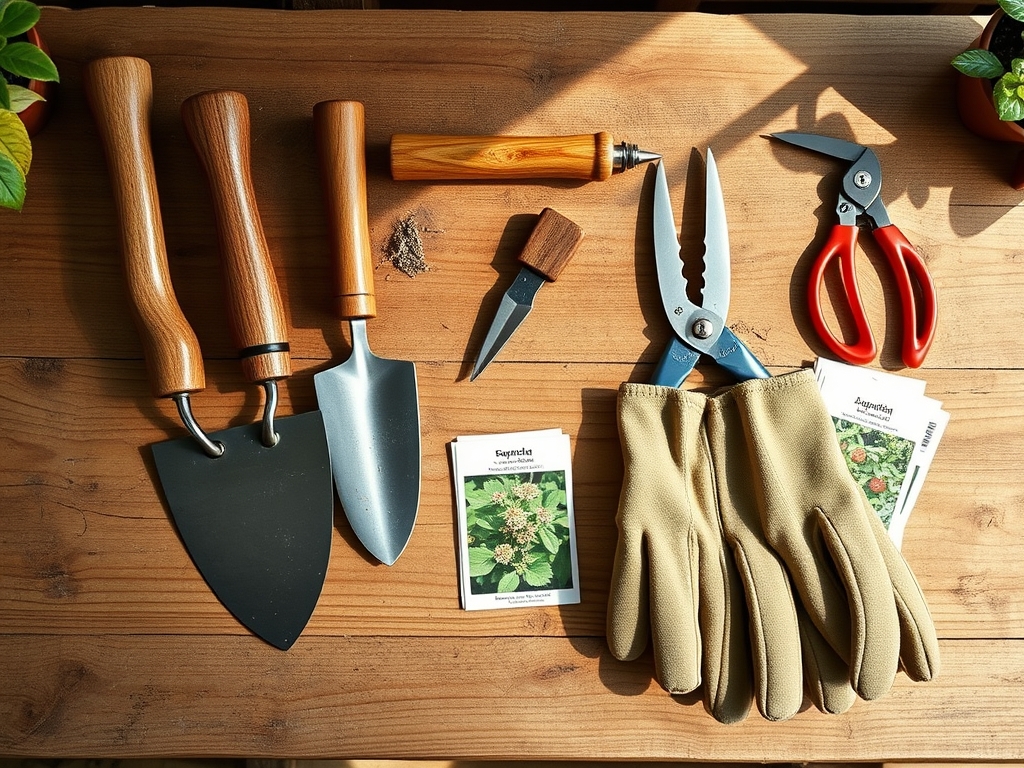
A 10-inch mill bastard file (medium coarseness, 26-36 teeth per inch) removes metal at the proper rate without gouging. Fine-grit whetstones (400-600 grit silicon carbide) follow for honing. A bench vise with padded jaws stabilizes the hoe without marring the finish. Penetrating oil (pH 7.5-8.0, low viscosity) flushes metal particles from the file teeth. Safety glasses protect against airborne steel fragments. Leather work gloves prevent blisters during extended filing sessions. A digital angle gauge ensures precision between 20-25 degrees. Wire brushes (brass or stainless steel, 0.008-inch diameter bristles) clear rust and soil residue before sharpening begins.
For blade preservation, apply a thin layer of linseed oil (0-0-0 NPK equivalent, though not a fertilizer) post-sharpening. This creates a moisture barrier comparable to plant cuticle wax. Store in low-humidity environments below 50% relative humidity to prevent oxidation.
Timing
Sharpen before peak weeding seasons: early spring (Zones 3-5, late March to early April) and mid-summer (Zones 6-9, late June). In Zone 10-11, year-round vegetable production requires monthly sharpening cycles. Align maintenance with frost-free windows when soil temperatures reach 50-55°F, the threshold for annual weed germination. Cold-season growers in Zones 2-4 should sharpen in late February, two weeks before last expected frost, to prepare for spring cultivation.
Frequency correlates with soil composition. Sandy loam (60% sand, 25% silt, 15% clay) causes minimal abrasion. Clay-heavy soils (45% clay, 30% silt, 25% sand) with higher cation exchange capacity contain more mineral particles that dull edges twice as fast. Adjust sharpening intervals accordingly.
Phases
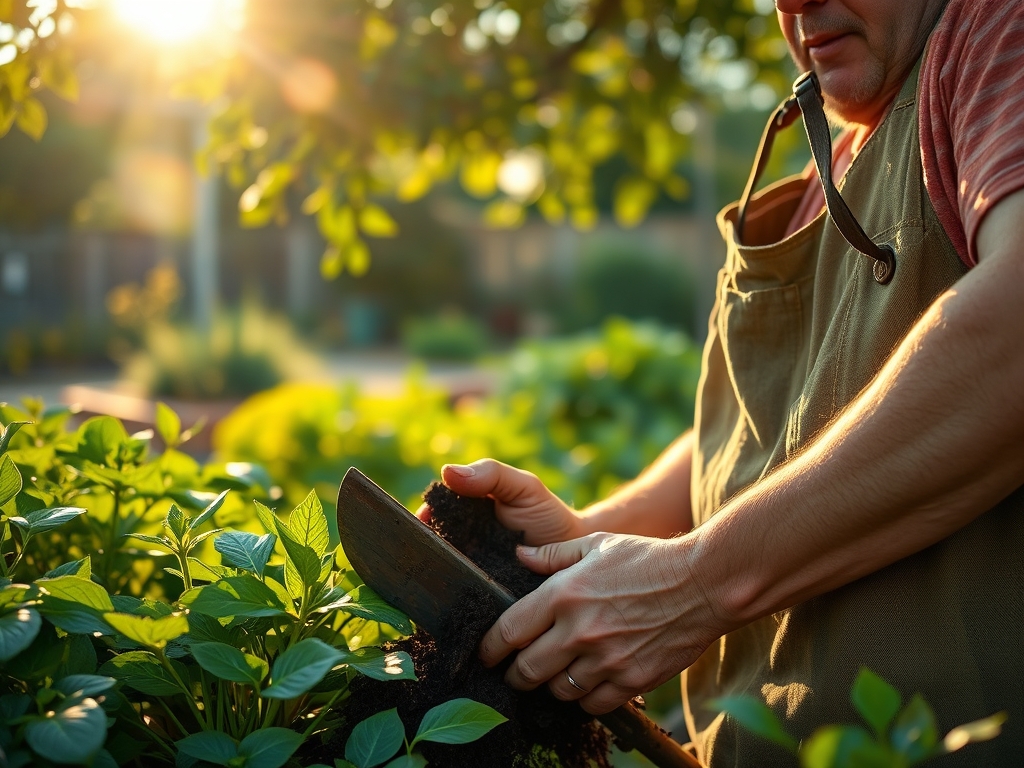
Step 1: Cleaning and Inspection
Remove the blade from the handle if possible. Submerge in a 5% white vinegar solution (acetic acid, pH 2.4) for 15 minutes to dissolve rust. Scrub with a wire brush at 45-degree angles to grain direction. Inspect for cracks longer than 0.25 inches or chips deeper than 0.125 inches. These compromise structural integrity similar to xylem cavitation in drought-stressed plants. Replace blades showing such damage.
Pro-Tip: Apply phosphoric acid rust converter (pH 1.5-2.0) to pitted areas. This forms a protective ferric phosphate layer analogous to lignin deposition in wounded plant tissue.
Step 2: Securing the Blade
Clamp the hoe blade in the vise with the beveled edge facing upward at a 15-degree angle from horizontal. The working edge should extend 3-4 inches beyond the vise jaws. Over-tightening creates stress fractures. Apply 15-20 foot-pounds of torque, equivalent to the force needed to compress pine bark mulch to 2-inch depth.
Pro-Tip: Insert rubber shims between vise jaws and blade. This distributes pressure like root-zone aeration prevents compaction.
Step 3: File Stroke Technique
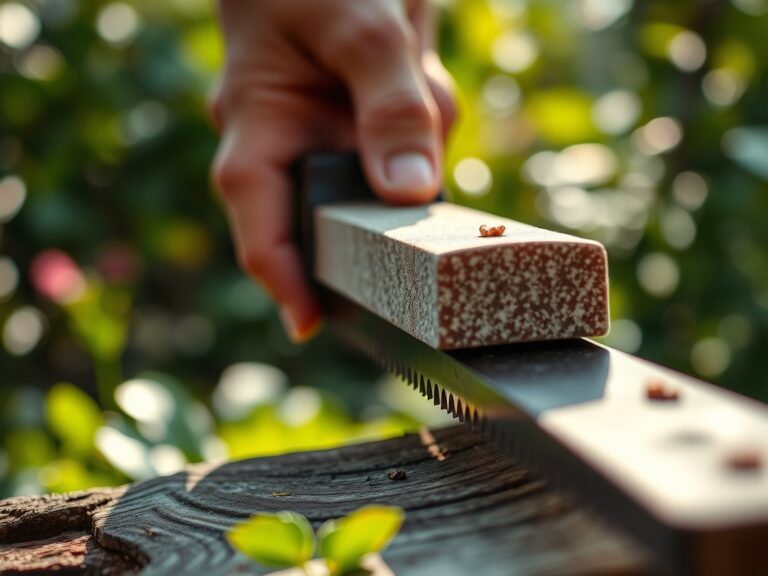
Position the mill file at 20 degrees to the blade surface. Push strokes only, never pull. Pulling drags file teeth backward, dulling them prematurely. Apply 8-12 pounds of downward pressure, similar to the force used when transplanting 4-inch rootbound perennials. Make 15-20 strokes per section, moving from handle end to blade tip. Maintain consistent angle throughout, as uneven bevels create turbulence in soil flow comparable to auxin distribution disruption.
Pro-Tip: Count strokes per section. Uniform material removal prevents asymmetric edges that pull left or right during use, like unbalanced root systems causing plant lean.
Step 4: Honing with Whetstone
Lubricate the 400-grit stone with water or honing oil. Execute circular motions with 5-7 pounds pressure for 50-60 rotations. Progress to 600-grit for 40-50 rotations. This burnishes microscopic serrations left by filing, creating a clean edge geometry. The process mirrors cell wall smoothing during secondary xylem formation.
Pro-Tip: Test sharpness on newsprint. A properly honed edge slices paper cleanly without tearing, indicating edge radius below 0.001 inches.
Step 5: Burr Removal
Filing creates a thin metal burr on the blade's backside. Hold the file flat against the non-beveled surface. Make 3-5 light passes to remove this rolled edge. Excessive pressure here creates a secondary bevel, weakening the primary cutting edge like secondary metabolite production diverts energy from growth.
Pro-Tip: Run your thumb perpendicular to the edge (carefully). You should feel smoothness in both directions, not a rough catch.
Step 6: Protection and Storage
Apply a 0.5mm coat of linseed oil or mineral oil to all metal surfaces. This excludes oxygen and prevents rust formation through hydrophobic barrier creation, functioning like stomatal closure during water stress. Hang the hoe vertically in a dry location. Horizontal storage allows moisture pooling at contact points.
Pro-Tip: Store with edge guards fashioned from split garden hose sections. This prevents accidental contact damage and maintains edge geometry between uses.
Troubleshooting
Symptom: Edge rolls or folds during use after sharpening.
Solution: Bevel angle too acute (below 15 degrees). Refile to 22-25 degrees. Softer steel grades (below 50 HRC hardness) also exhibit this behavior. Upgrade to heat-treated carbon steel.
Symptom: Blade chatters or vibrates through soil.
Solution: Uneven bevel from inconsistent file pressure. Inspect under raking light for waves along the edge. Re-sharpen entire length with counted strokes per section.
Symptom: Rust appears within 48 hours of sharpening.
Solution: Insufficient oil coating or storage in humidity above 60%. Clean with fine steel wool, reapply thicker oil layer (1.0mm), and relocate to climate-controlled space.
Symptom: Handle wobbles at connection point post-sharpening.
Solution: Over-tightening in vise transmitted stress to collar. Replace ferrule or use epoxy resin (two-part, 3500 PSI tensile strength) to stabilize joint.
Symptom: Blade cuts inconsistently, effective only on forward or backward stroke.
Solution: Single-bevel edge when double-bevel required. Dutch hoes need symmetrical 20-degree bevels on both faces for bi-directional cutting. Flip blade and file opposite side.
Maintenance
Sharpen every 8-10 hours of active use or when weeds bend rather than sever. In commercial market gardens cultivating 0.5-1.0 acres daily, this translates to weekly maintenance. Home gardeners working 15-20 minutes per session need monthly attention. Clean the blade after each use with a dry brush. Apply oil every 30 days during storage, as oxygen permeates protective layers at 0.02 inches per month. Inspect the handle-to-blade connection quarterly for looseness. Tighten or replace hardware when play exceeds 2mm.
Store in sheds or garages where relative humidity remains below 50%. In coastal regions (Zones 9-10) with marine air exposure, increase oil applications to every 14 days. The salt content accelerates oxidation through electrolytic action similar to nutrient mobility in soil solution. Check edge geometry with an angle gauge before each growing season. Deviations beyond 3 degrees from the target 22-degree angle reduce cutting efficiency by 40%, comparable to yield loss from 15% nitrogen deficiency.
FAQ
How often should I sharpen my Dutch hoe blade?
Every 8-10 hours of soil contact for professional use, monthly for home gardeners. Clay soils require more frequent maintenance than sandy loam.
What angle produces the best cutting edge?
20-25 degrees provides optimal balance between sharpness and durability. Angles below 15 degrees roll easily; above 30 degrees require excessive force.
Can I use a power grinder instead of hand files?
High-speed grinders generate heat above 400°F, reducing steel temper and hardness. Hand filing maintains material properties while providing superior control.
Why does my blade rust despite oiling?
Storage humidity above 60% or salt exposure (coastal environments, winter road spray) penetrates oil barriers. Increase application frequency and add desiccant packets to storage area.
Should I sharpen both sides of the blade?
Yes. Dutch hoes require symmetrical double bevels for bi-directional cutting. Single-bevel designs bind in soil and cut inefficiently during the return stroke.